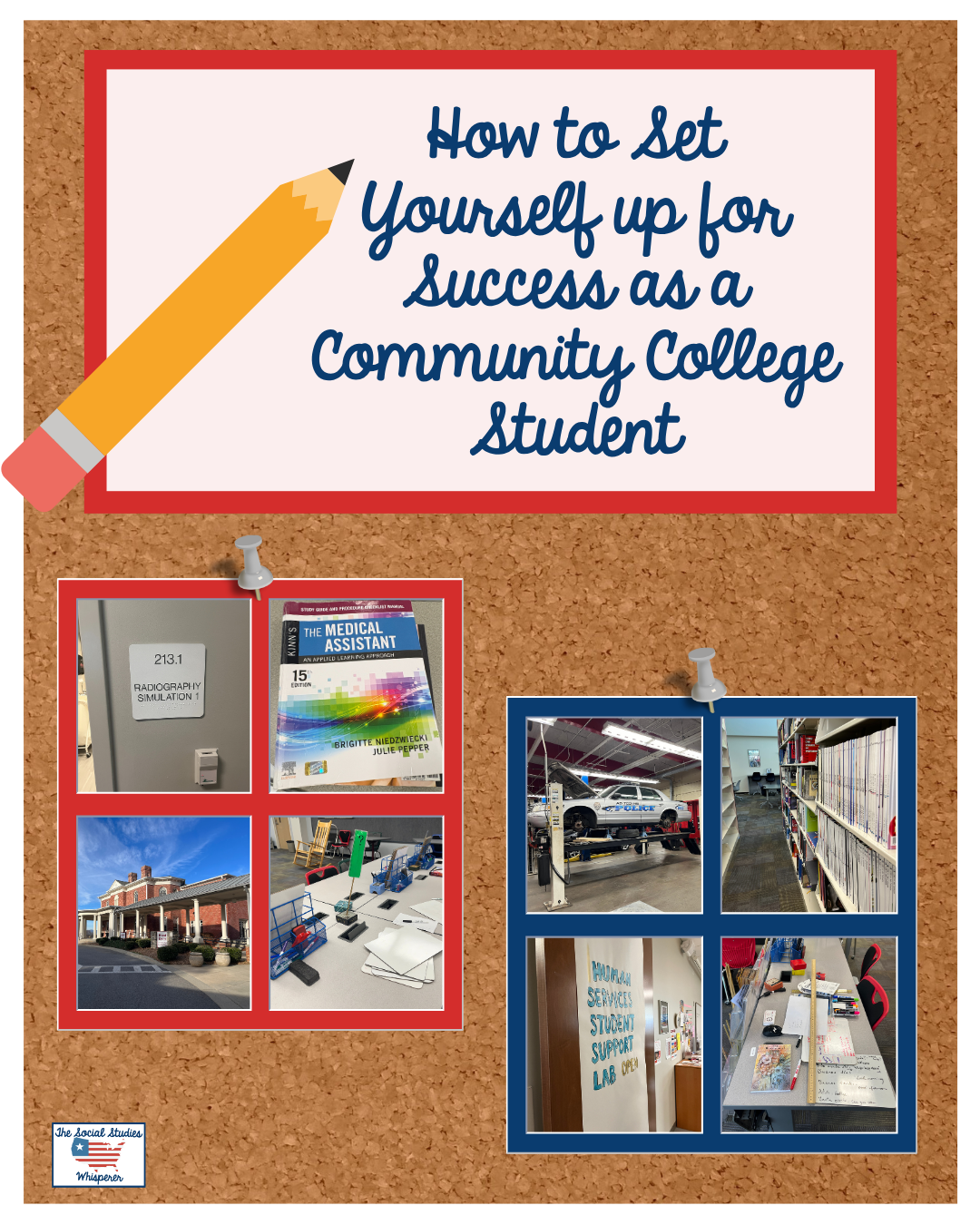
Starting anything new can be challenging. Enrolling in college? Now that’s adding a whole next level of stress! This post is designed to help you be prepared ahead of time, which will definitely help combat that. As the title says, it’s important to set yourself up for success. That catch phrase is second only to “making an action plan” and “problem solve” as being my favorites. Let’s do a “3 for 1” special and make an action plan for starting college while we anticipate problems in advance by taking initiative!
I’ve been working in Adult Education for the past 5 1/2 years after pivoting from teaching traditional K-12 for a really long time. I’m also a mom of one college grad and one current college student so I have seen it all at this point. In my current role I work with High School Equivalency, Adult High School, and international students who are taking classes to learn English while often pursuing higher educational goals at the same time. I’ve taught a starter level college success skills class in our department several times. Honestly, I’ve lost count! That being said I have quite a bit of experience working with students who are college bound and I can help you, too!
There aren’t a lot of resources designed for students enrolling at a community college specifically unless you count the tv show “Community.” I don’t think that’s quite an accurate portrayal of what really happens. Many articles, etc. are designed for the traditional high school grad heading off to a 4 year school at age 18. Those aren’t helpful for my students.
Community college students are often navigating a career change, working at the same time as attending college, managing family responsibilities, and might even be the first person in their family to attend college. Those needs are different! I thought it would be helpful to have a guide for non-traditional college students starting community college.
First of all, be aware that it’s very likely you might experience “culture shock.” This doesn’t just happen when you move to a new country. It could happen when you move to a new city, start a new job, or start college. I definitely experienced this when I moved from metro Atlanta to Asheville! The first step is acknowledging it’s a thing!
Identify What’s Happening
Change is hard, even if it’s for a good reason. This stress you feel with new beginnings could be stemming from that “culture shock.” According to merriamwebster.com, culture shock is defined as “a sense of confusion and uncertainty sometimes with feelings of anxiety that may affect people exposed to an alien culture or environment without adequate preparation.” Now alien in this sense does not mean little green guys from Mars, it means anything foreign to you.
Moving to a new area, starting that new job, or enrolling in college classes can all be wonderful new beginnings but the environment is unfamiliar to you. This feeling of anxiety with these scenarios can activate your flight/fight/freeze response which causes you to react with your emotions instead of thinking logically. It can also cause you to to shutdown and keep to yourself and maybe even be afraid to ask for help!
This happened to me when I started my current job! It took me 2 1/2 years to learn that there was a vending machine in my building! When I started in a previous position I was located at an off-site location and then the pandemic happened and I ended up working from home for awhile. I was too stubborn to even ask because I thought I should have already known. Feeling like “you should already know” or being hard-headed about asking for help can hold you back.

This isn’t optimal for being successful in college. Faculty and staff members are there to support you! It’s literally our job! We are used to a lot of non-traditional college students. You may be the first person in your friend and family circle to go to college so how would you know what to do? If you’re proactive, get involved, and keep your goals in mind then you can do more than just survive college. You can thrive! Let’s break this down into those previously mentioned steps.
Be Proactive
Before even enrolling, request a campus tour or get a campus map and check it out yourself (search on your school’s website or ask Admissions) to get the lay of the land. Most schools have a person in a recruiter role, who can answer your questions about how to apply. Pay close attention to deadlines for financial aid, scholarships, and applying to certain programs. North Carolina has the College Foundation of North Carolina site, which is very helpful http://(College Preparation: College for North Carolina (CFNC). Look for something similar specific to your state.
Find out if what you are interested in studying has a wait list or extra steps you have to take to be admitted. Some programs may require an exam to enroll, and some popular programs may have to put a cap on the number of students who can start at a certain time. These are called selective or limited at the community college where I work. Programs like nursing are selective and require and entrance exam and cosmetology falls under limited because logistically there is not room in a classroom for every one interested! You can start some programs and classes during a summer semester but others may only enroll in fall or spring.
Plan ahead. Get a physical catalogue or spend time researching on the school’s website. It is ok to send a professional email to a contact person for the program you are considering and ask questions or request an appointment. They are the specialist in that field and would be able to recommend what credential will be best for the career pathway you are pursuing.
Not sure what you want to study or need to wait to enroll in a certain program? You can start out by taking some classes in what I call “core” areas but schools now call “gen. ed” (general education) like basic math, English, computer classes, etc. I’d recommend looking into your programs of interest first though or maybe taking a continuing education class. Those are things that could just be for fun or help build job skills to get your foot in the door at the college. Many of these are like a 2x a week for 8 weeks kind of thing. Follow the school on social media, too! You can really get a feel for a place that way and find out about recruitment events!
Continue to learn college lingo such as “gen ed”, selective, and limited. That catalogue can help you with this! You could even ask something like ChatGPT to create a list for you with definitions. If you learn these college “vocabulary” words and even abbreviations, you will feel like you are “speaking the language” instead of being confused.
Other examples are listed below (my definitions):
- pre-requisite: something required before taking a class, enrolling
- co-requisite: a class required to be taken along with something else, such as a lab
- advisor: person you meet with to plan your classes
- recruiter: person who helps you with applying to college
- credit hours: these are like total points you need to earn a credential
- contact hours: the actual amount of time you will be sitting in class
- synchronous: at the same time in terms of a class-you must attend those specific hours
- asynchronous: NOT at the same time in terms of when your class meets
Once you have finished the enrollment/admissions process, there are several things you can do to feel even more empowered when your classes start. First meet with an advisor. Stay in contact with your advisor and don’t make any sudden schedule changes without consulting them! Decide if you might be interested in doing a transfer pathway to a 4-year university. It’s important to make sure you are taking the right classes to be able to transfer and that you don’t waste your time and money taking any that don’t.
This might seem obvious but practice driving to campus when it’s the time you will be attending any in person classes. Pay attention to school traffic or possible construction traffic spots. Figure out where to park on campus and how long it will take you to walk to class. Find your classrooms. Take pictures if you need help remembering and bookmark that campus map on the website or carry a printed copy (Gen X suggestion I know). If you are doing online classes, make sure you have reliable devices and a way to attend virtual sessions such as Zoom or Microsoft Teams.
Find the bookstore, bathrooms, vending machines, and campus dining options. Nobody wants to end up hangry! Plan to bring snacks and bottled water when you start classes. Some class/lab spaces may not permit this so keep that in mind. Be prepared with school supplies before classes start. Sometimes old school spiral notebooks can be a lifesaver. Block out study time on a calendar! My inner mom wrote this paragraph.
Now you’re ready for classes to begin! You are! You can do this! Just have a clearly defined goal. Let’s talk more about that.
Focus on Your “Why”
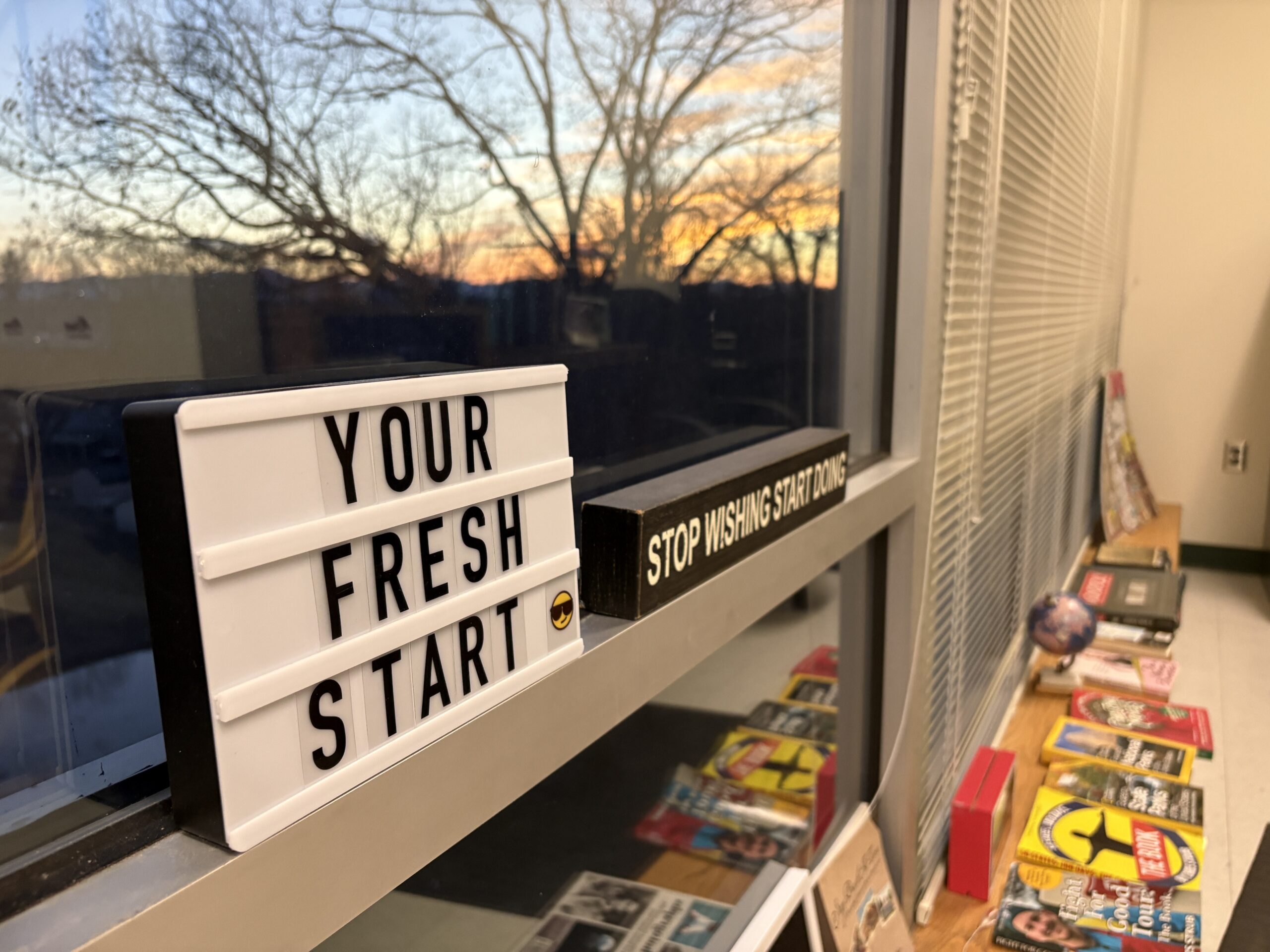
Ask yourself what your reason for enrolling in college is. Why are you doing this? Is it because you want to be a role model for your family and friends? Is it to get a better paying job? Is it to achieve a promotion at your current job? Is it for personal satisfaction? You don’t need to tell me. This is for you. Whenever you get stressed out once classes start, keep that answer in mind. The phrase “keep your eyes on the prize” seems kind of cliche but it’s what you need to do. Keep a photo for inspiration or quotes to help you. Keep it in your Notes app of your phone or start a vision board. Keep a post-it note on your car dashboard. Find a way to keep that dream top of mind. By being strategic and focused, that dream can become a reality.
What if you feel overwhelmed? This is more of a “when” than an “if.” Have a self-care plan and I don’t mean in a cheesy Instagram “Don’t worry be happy” cutesy quote kind of way. In a practical, “I will take daily walks, meditate 15 minutes a day, spend time playing outside with my kids” kind of way. Know what calms you down and makes you happy! For me, doing Zumba or Hip-Hop Fitness at the gym helps me manage stress. Your school might have a fitness center you can use for free. If not, they definitely have a parking lot you can walk around for free. Been there, done that! The research is out there for exercise and stress relief!
Get involved in activities such as clubs or Student Government Association. Attend campus events and get to know people. Build a community. Form a study group with classmates. Step out of your comfort zone if this isn’t something you would normally do. College is a great opportunity to redefine yourself as a student and a human in general! If that way of connecting seems intimidating, find out what student support services are available to you. Is there mental health counseling, career services, addiction/recovery resources or a food pantry? My school provides these things and yours may, too.
Academically if you are struggling there are several things you can do. Meet with your advisor first of all. Make an appointment to meet with your instructor/professor during their office hours. Find out if your school has a Tutoring Center. Most schools do! Try to get ahead of this by following these tips. You know what areas may provide a challenge for you. Bet that “The Social Studies Whisperer” spent many a time in her professor’s office during office hours when taking pre-Calculus in the 90s! Luckily, I didn’t have to take calculus.
I hope this post offered you some encouragement and practical steps. Before I wrap it up, I want to remind you that you can do this! Your brain may try to trick you into thinking you can’t. Don’t self-sabotage. It’s not going to be easy, but it will be worth it! I am excited for you!